Main Contents

Printable Version

Corporate Information

NTT Communications group CSR Report 2007

Basic Environmental Protection Concepts and Management

We are reinforcing our Group environmental management structure while safeguarding the environment in all our business processes so we can contribute to a better society.

Basic Philosophy
NTT Communications Global Environmental Charter

The NTT Group announced the NTT Group Ecology Program 21 and the NTT Group Global Environmental Charter to frame its ideals and actions. We supplemented these initiatives with the NTT Communications Global Environmental Charter, which guides the activities of all our employees.

NTT Communications Global Environmental Charter

Basic Principle
NTT Communications will safeguard the environment in all aspects of business and help create an environmentally friendly society by innovating and delivering the best services to all customers.
Basic Policies The following policies apply to all our corporate activities.
1)Meet corporate responsibilities
We observe all domestic and international environmental laws and regulations. We evaluate the environmental impact of our activities, strive to prevent pollution, and continually upgrade our goals and strategies to save energy resources and reduce waste.
2) Support initiatives for an environmentally friendly society
We help to improve society and lower its environmental impact through network services that transform lifestyles. Our efforts include supporting telecommuting and providing an information platform for environmental protection and recycling.
3) Contribute through environmental activities
We collaborate with communities and governments in daily activities that protect the environment.
4) Disclose environmental information
We disclose corporate environmental information and encourage internal and external dialog.

Back to the page top

Environmental Protection Framework
Strengthening Group Management

The president and special working groups spearhead ongoing environmental initiatives for the Group. The Environmental Protection Sub-committee met twice in fiscal 2006 to formulate proposals, oversee targets, and resolve issues.

    Working Group Main Tasks
President Greenhouse Gas Reduction
  • Press ahead with Total Power Revolution campaign to cut electricity consumption
  • Hold monthly meetings to formulate ways to conserve energy within our buildings
Dismantling Communications Equipment
  • Process and manage dismantled equipment in line with the law
Construction Waste
  • Process and recycle construction waste
  • Eliminate asbestos and manage reconstruction
Environmental Protection Office PCB Storage and Disposal
  • Store and dissolve polychlorinated biphenyls
  • Submit polychlorinated biphenyl management reports to the government
Office Waste
  • Process and manage office waste in compliance with law
  • Sort and collect office waste
  • Mount activities to cut office paper consumption (reduce paper usage and switch to recycled paper and electronic documents)
Customer Waste
  • Treat and manage industrial waste from installation projects for customers
  • Put industrial waste treatment manuals on intranet and update as necessary
Container Recycling
  • Comply with the Containers and Packaging Recycling Law
Green Procurement
  • Encourage green purchasing companywide
  • Educate suppliers on green purchasing guidelines
Environmental Accounting
  • Build environmental accounting system for management
  Community contributions related to environmental protection
  • rint business cards solely on kenaf to ease deforestation
  • Recycle and donate PCs to nonprofit organizations
  Group company working groups
  • Expand working group initiatives groupwide and institute PDCA cycles

Back to the page top

Environmental Management
ISO 14001 Certification
  Fiscal 2006
Certified companies 4
Certified departments 12

In October 1999, the Materials Office Planning Department (now the Procurement Office) obtained certification under ISO 14001, the international standard for environmental management. This office oversees all procurement processes companywide.

The Business Development System Engineering Department was certified in March 2004. The department designs and constructs telecommunications systems hardware and software and endeavors to minimize the environmental impact of its designs and industrial waste treatment.

As of March 31, 2007, 12 departments from four Group companies were ISO 14001-certified. Apart from the parent, these companies were NTT World Engineering Marine (from June 2001), NTTPC Communications (November 2003), and NTT BizLink (March 2007).

Comments from Group Companies about ISO 14001 Certification

NTT BizLink, Inc.

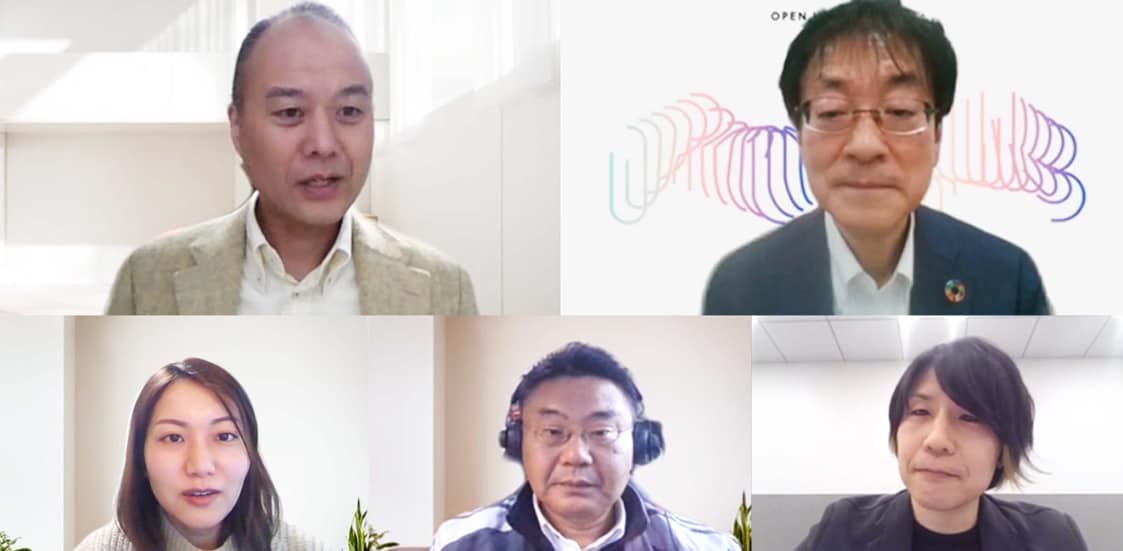
photo:Tsuneo Ohkawa photo:Misao Inoue

Tsuneo Ohkawa (left) and Misao Inoue,
Department Managers of the Corporate Strategy Planning Department

We started preparing to obtain ISO 14001 in July 2006 and were certified on March 30, 2007. Our policy is to contribute to society and the environment by minimizing the environmental footprint of our business. To assess our efforts to consume less copy paper and electricity, we joined hands with the NTT Information Sharing Laboratory Group to calculate the resulting reductions in carbon dioxide emissions. It is worth noting that our videoconferencing service cut such emissions by 120,000 metric tons in fiscal 2006. Some of our people are studying to become environmental management system auditors and thereby underpin our companywide environmental initiatives.

NTT FANET SYSTEMS Corp.

photo:Mitsutaka Yoshikawa photo:Masanori Ato,

Mitsutaka Yoshikawa (left), Senior Director & Executive Manager of the Quality,
Security & Social Responsibility Office, and Masanori Ato, Senior Manager of that Office

We obtained ISO 14001 certification on April 5, 2007, after a companywide preparation project that top management headed. Our environmental policy is to provide solutions that lower the environmental impacts of our offices and those of our customers. We accordingly declared that we would practice green purchasing that excludes products containing hazardous substances. In fiscal 2007, we aim to cut power consumption 2% and similarly seek a 2% reduction in the volume of paper we use for printing, copying, and faxing. We will increase sales of energy-saving fluorescent lights. Also in that year, we will focus on producing green purchasing guidelines while collaborating more with our business partners.

Back to the page top

Environmental Accounting
Costs and Financial Impact of Environmental Protection
Effective Financial Impact(Millions of yen)
  Fiscal 2005 Fiscal 2006
Revenues From sales of cable and metals 165 539
Savings Lower power charges owing to initiatives 47 -
Reduced equipment purchases from reusage 1,941 1,688
Decrease in postal and paper costs from Web Billing system 239 287
Total 2,394 2,515

In fiscal 2006, our environmental protection programs cost around ¥1,680 million, up roughly ¥246 million from a year earlier. The two components were reflected investments of around ¥798 million and expenses of about ¥882 million. Our investments were down slightly, although expenses rose, principally because of rises for pollution prevention, environmental protection, and social activities. The financial impact of our initiatives in fiscal 2006 was about ¥2,515 million, up about ¥121 million. Prime contributors were a surge in sales of cable and metals and a reduction in invoicing expenses because of our Web Billing service, which allows customers to check call charges.

Costs
Category Key measures Investments Expenses
Fiscal 2005 Fiscal 2006 Fiscal 2005 Fiscal 2006
(1) Business area costs   911.8 798.1 440.7 776.2
Breakdown 1.Pollution prevention costs
  • Removed and treated asbestos from buildings
  • Stored and treated polychlorinated biphenyls
91.0 88.4 44.8 208.2
2. Environmental protection costs
  • Upgraded air-conditioning facilities using designated chlorofluorocarbons
820.7 702.1 89.2 280.5
3. Resource circulation costs
  • Deployed electronic conferencing system
  • Recycled construction waste
  • Reused dismantled telecommunications facilities
- 7.5 306.6 287.5
(2) Upstream and downstream
  • Developed Web Billing system
- - 21.1 28.9
(3) Administrative
  • Environmental publicity (reports and website)
  • Building greenification
  • Built and managed environmental information system
- - 12.8 43.1
(4) R&D
  • Conducted environmental R&D at laboratories of holding company Nippon Telegraph and Telephone Corporation
- - 47.2 33.3
(5) Social activities
  • Donations to environmental organizations
- - - 0.5
(6) Remediation   - - - -
Total   911.8 798.1 522.0 882.1

Notes:

  • Fiscal years are April 1 through March 31.
  • Data is for NTT Communications only.
  • Tabulations based on the Ministry of the Environment’s Environmental Accounting Guidelines 2005 and the NTT Group’s Environmental Accounting Guidelines.Expenses included personnel costs but not depreciation.

Back to the page top

Environmental Compliance
Adhering to Laws and Ordinances

We collaborate with other NTT Group companies to educate business units about environmental laws, emission standards, the PRTR*, and other ordinances and standards. We have also formulated voluntary internal guidelines to assist compliance. In fiscal 2006, we incurred no litigation and committed no violations of laws and ordinances and had no environmental mishaps, infractions, penalties, or complaints to report.

*The Pollution Release and Transfer Register helps organizations to assess and better manage designated chemical substances and their environmental impacts.

Back to the page top