


Skip the Navigation to read the main contents

Home > About Us > CSR > CSR Report 2011 > Respecting Our Employees > A Workplace for Everyone

CSR Report 2011

A Workplace for Everyone

Human Resources Development and Evaluation A Workplace for Everyone Maintaining and Improving Employee Health Relationships with Employees Respecting Human Rights

NTT Communications is creating workplaces with diverse human resources where employees can truly harness their skills by drawing on individual attributes, values, and ideas.

Fostering Diversity

Diversity Office

In April 2008, NTT Communications established the Diversity Office in order to promote a business management strategy that utilizes the diversity of human resources, and implemented activities that centered on supporting the successful development of women in the workplace, promoting the hiring of people with disabilities and securing diversity.
In fiscal 2010, we focused on “bolstering team capabilities as a global company” in addition to our existing activities. Specifically, we put the Diversity Office in charge of raising awareness among all employees by working with the Global Human Resource Management (GHRM) team, which is undertaking various measures to promote the “Global One Team” concept. Using our Intranet, we disseminated content related to communication among different cultures and interviewed employees seconded from overseas units, representing diverse group of employees on the Intranet site.
We plan to continue rolling out initiatives to promote diversity on a global scale in the future.
In fiscal 2011, we will mainly promote work-style reforms after being selected as a “Tokyo model business for work-style reforms” by the Tokyo metropolitan government.

Obtaining the “Kurumin” mark

Kurumin mark

Kurumin mark

In April 2005, we launched a three-year action plan for childcare assistance and have been working to promote various initiatives to help our employees balance their professional and private lives. We received Kurumin mark certification in 2008 in recognition of our endeavors.
Thereafter, following a second action plan (April 1, 2008 to March 31, 2011), we have drawn up a third action plan (April 1, 2011 to March 31, 2015), toward creating a workplace environment where every employee can work happily, accepting and understanding diverse work styles.
From April 1, 2011, a new law required businesses with at least 101 employees to draw up and submit business owner action plans. NTT Communications Group companies subject to the requirement responded by drawing up and submitting various action plans in fiscal 2010.
We also newly instituted a “workplace return preparation seminar” for employees on childcare leave to reconfirm the system for returning and hold conversations with employees that have already returned to work.
Going forward, we will go beyond supporting the balancing of work and childcare, and consider measures with a career advancement theme, such as appealing to both individuals and their superiors regarding further career advancement (appointment to management positions, etc.) for employees in such situations.

Supporting working women

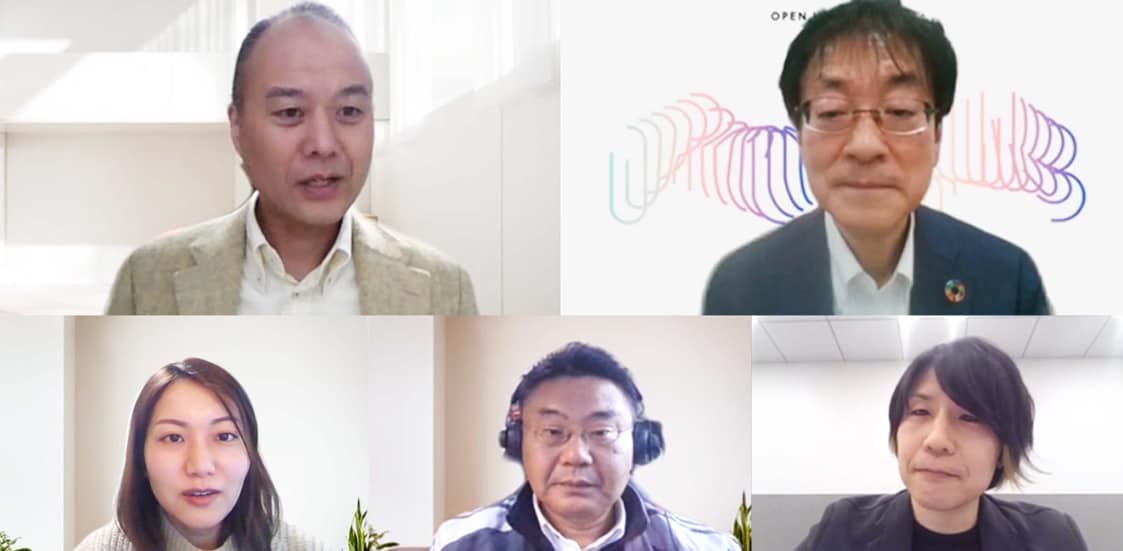
Seminar on childcare leave and work return support

Seminar on childcare leave and work return support

One role of the Diversity Office is to promote support for the successful development of women in the workplace. In particular, we carry out measures to support employees in balancing their professional lives with childcare and other demands by inviting visiting lecturers to hold childcare leave and work return support seminars, offering a variety of role models, and creating an internal cross-sectional communications network for female employees.
According to the results of a survey of all employees, it was discovered that female employees, in particular, felt confused when choosing among diverse careers since there were few role models they could relate to. Therefore, we listed female managerial role models on an Intranet site in fiscal 2010, supporting female employees in setting goals when choosing among diverse careers. Going forward, the NTT Communications Group will roll out joint initiatives, working on further career development support for women.
Joint group training for female career development was also held as an NTT Group initiative. Several NTT Communications employees also participated as representatives in seminars with guest speakers, panel discussions with older NTT Group employees, and self-reflection over four months. We are continuing our activities toward the creation of the next generation of female leaders for the overall NTT Group.


Number of female managers (manager and above)
Fiscal 2008 Fiscal 2009 Fiscal 2010
67 (2.9%) 74 (3.1%) 71 (3.2%)

(Scope: NTT Communications (non-consolidated), including seconded employees)

Strategic initiatives for female employees

Strategic initiatives for female employees

Page Top

Helping Employees Fulfill Professional and Private Commitments

To make sure that having a child or caring for children or elderly relatives does not interfere with career development, we established a system of vacations, leaves, and shortened workweeks to help employees balance their professional and private commitments. We also conducted various awareness-raising activities to foster workplaces where people feel easily able to take advantage of these systems.
A ?Communication Handbook? was planned and issued by the NTT Group in March 2009, and NTT Communications distributed this to all employees. The contents deepen mutual understanding of diverse work styles suited to life stages through smooth communication between superiors, the workplace and individuals.
In fiscal 2010, we again utilized the NTT-LiFE+ childcare/eldercare support site for employees to disseminate information about systems and share experiences of using them. This site can be accessed from home by employees on childcare leave to obtain information, and also responds to the needs of employees preparing to return to the workplace. In addition to our system for re-hiring employees who had resigned to focus on childcare, we introduced a system for re-hiring those who had resigned due to spouse’s work transfers, or similar reasons.
In fiscal 2011, this will be expanded to men and young employees that will be involved in childcare in the future, with further measures taken to support the balancing of childcare and careers.

Overview of Support Programs and User Numbers
Program Overview Number of users
Fiscal 2008 Fiscal 2009 Fiscal 2010
Maternity leave From 6 weeks before and 8 weeks after childbirth 49 59 68
Childcare leave Leave for up to 3 years after childbirth 109
(including
2 men)
140 129
(including
6 men)
Special working system to assist childcare 4, 5, or 6 hour workday to accommodate childcare until the end of the school year in which the child reaches the age of 8 (until end of the third year of elementary school) 120 149
(including
2 men)
145
Eldercare leave To care for elderly family members, employees may take leave of up to 93 days as designated by law, plus an additional 15 months under company rules for care of the same person 3
(including
3 men)
2
(including
1 men)
4
(including
4 men)
Reduced working hours for eldercare To care for elderly family members, employees may work reduced hours for up to 93 days as designated by law and work for only 4, 5, or 6 hour a day for up to 33 months under company rules for care of the same person 5 0 1

(Scope: NTT Communications (non-consolidated))

Promoting working from home

A look at e-work

A look at e-work

In August 2007, the e-work (working from home) system was introduced as a way of balancing work and home life. The system enables employees that need to take care of children or family members to be provided with Company “thin client” computers up to two days a week. A cumulative total of around 200 employees have made use of this system since its first season.
We will continue to make efforts going forward so that employees can choose diverse working styles.

Employment of People with Disabilities

With our emphasis on diversity in the workplace, we have taken steps to promote hiring of people with disabilities.
In fiscal 2010, we implemented follow-up measures after hiring and initiatives to improve all employees’ understanding of people with disabilities, as in the previous year. We also coordinated Group hiring to reach the statutory hiring ratio for people with disabilities of 1.9%. New initiatives included follow-up interviews of people who had worked less than three years at the company and seminars on supporting network-building for employees with disabilities, to encourage exchanges and problem-solving among employees.

Retaining Employees Who Reach Retirement Age

We introduced the Career Staff System, which allows employees reaching the mandatory retirement age of 60 to continue working if they wish, until they reach 65.

Number of rehired employees
Fiscal 2008 Fiscal 2009 Fiscal 2010
36 56 60

(Scope: NTT Communications (non-consolidated))