


Skip the Navigation to read the main contents

Home > About Us > CSR > CSR Report 2010 > Dialogue

CSR Report 2010

Dialogue

Promoting diversity management as the company strategy

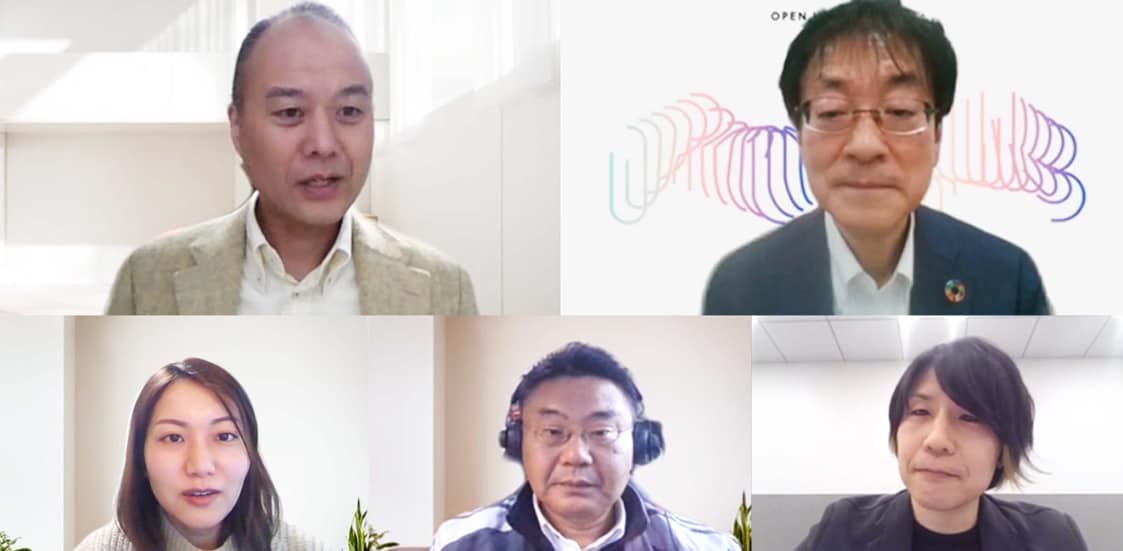
The promotion of diversity is essential to ensure the growth of any global corporation. We held a discussion with external expert Yoshiki Midorikawa on the current status and future direction of NTT Communications.

PROFILE

Yoshiki Midorikawa
Yoshiki Midorikawa
Chairman of the Green Consumer Research Group. Founded the CSR Research Group in 2004 while working as co-chair of the Valdez Society. Judge for the Sustainability Reporting Awards; also provides assessments of corporate CSR activities.
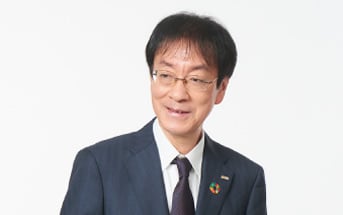
Shinobu Umino
Shinobu Umino
Group CSR Committee Chairman
and Senior Executive Vice President of NTT Communications
Yoko Kobayashi
Yoko Kobayashi
President and CEO
of NTT Com CHEO Corporation
Hideaki Ozaki
Hideaki Ozaki
Vice President of the Global Strategy Department,
Global Business Division
Megumi Yamamura
Megumi Yamamura
Director of the Human Resource Development Group,
Human Resource Management Department
Nick Kraal
Nick Kraal
Manager of NTT MSC Sdn. Bhd.
Kathryn Mensendiek
Kathryn Mensendiek
Manager of NTT America, Inc.

The mutual understanding is the first step toward diversity

Yamamura:
Global human resource management (GHRM) initiatives focus on human resource development for employees in Japan and also national staff (NS) at overseas subsidiaries. Currently, we run a program for accepting NS from overseas subsidiaries as part of a variety of career exchange programs and training courses including on-the-job training (OJT). Kathryn Mensendiek is one such NS member. After spending half a year here, we are interested to hear about the differences between Japan and her own country.
Mensendiek:
I feel that there are many people in Japan who think in the same way and have similar values. At NTT America, where I work, a variety of values coexist and respecting each other's opinion is considered important. I hope the Japanese staff find the lively exchanges with seconded employees from overseas stimulating and that this contributes positively to business activities.
Kobayashi:
This is because Japanese people have achieved their successes to date by conforming to those around them, thereby achieving unity.
Ozaki:
With the progress of globalization nowadays, Japanese people feel the same as NS. If you can't cooperate in all aspects of business operations, you won't be able to provide better services. Because of this, I tell employees who are seconded overseas to open their hearts to the local people.
Kraal:
I think it is important that headquarter staff appointed from Japan understand diversity concepts before being assigned overseas. Some seconded employees tend to cluster together because of their uncertainty about the differences in language and culture and as a result walls are built between them and NS. In such situations, I try to create opportunities for interaction in and out of the workplace to engender understanding of the merits of working in a varied environment. It is true that language skills are essential for global business but this is nothing more than a tool. By actively interacting with NS it is possible to create better relationships and work environments yielding positive results in terms of improved teamwork, decision making, and problem solving.
Ozaki:
In order to gain the most from the experience, the specialist knowledge, and the leadership of the NS, it is important to have a shared awareness of mutually recognized individuality, in addition to a language skills base.
Umino:
Globalization is causing upheavals in the management environment and at the same time huge changes in individual awareness. In particular, we are seeing changes in concepts. For example, the idea among young people that broken English is okay, as long as you are understood. We are also seeing changes in people of all ages in the notion that women will leave the workforce when they get married or have children. In other words, as changes occur in economic systems and individual awareness, it is likely that the promotion of diversity at companies is not just necessary, it is inevitable.

Page Top

Creating an environment that fosters diversity

Kobayashi:
When I joined the Company in 1978, there were still disparities between men and women. However the privatization of NTT in 1985 marked a major turning point, as we came to understand the importance of incorporating the female perspective when creating services that appealed to users, and women began to be employed to realize the full extent of their potential. In the old days, childcare and nursing care was considered by many to be the responsibility of women, but in recent years, company systems have undergone significant improvements and, as Vice President Umino mentioned, we are starting to see large changes in employee awareness.
Yamamura:
From a female perspective, the increasing number of female role models like Ms. Kobayashi is very encouraging. However, in Europe and North America many fathers leave work on time and pick up their children from daycare and there is no difference between the childcare or work responsibilities of men and women. In future, changing not just womens but also men's work styles will probably be the key to changing Japanese companies.
Mensendiek:
To me it seems like the work style at Japanese companies is one where everyone comes together at a fixed time and place and works together. This means that if you leave early to pick up your kids, you might feel like you are doing something wrong. In America, there is a lot of freedom in work styles, regardless of gender, and just because someone is not in the office doesn't mean people will think they're not working.
Midorikawa:
Overseas, even permanent full-time employees may work shorter hours for various reasons, making it easy to choose a work style that suits the individual. In Japan, too, more flexible work styles regardless of gender or type of employment will likely become an issue for consideration.
Kraal:
It is a common view to think of Japanese people as working diligently in a regimented environment from early in the morning through to the last train. In my home country of Malaysia, the generalization is that people are relaxed at work and are very casual about time. After spending over a year working in Japan, I have come to feel that when you compare the work styles and work environments in both countries, you will find they are not so different after all. I think not only businesses but also work environments are becoming more globalized little by little.
Midorikawa:
While Japanese companies are working to rid themselves of the Japanese employment system, which is mostly advantageous for permanent full-time male employees, there is still no support system for a diversity of work styles. In future, we may need to think about introducing initiatives in Japan similar to those overseas. In addition to creating a variety of options for work styles, I look forward to the establishment of a system that allows men and women alike to build their careers and continue working.

Page Top

Changing employee awareness of diversity

Umino:
Japanese people have traditionally had relatively low awareness of time management at work. In this day and age where if you have a computer you can work from home, it would be best to think of improving performance and making efficient use of time by breaking work into a certain number of hours at the office and a certain number of hours at home. For diversity to translate into business growth, it will be important to not only increase the number of work style choices and the ratio of female managers, but also to change employees' awareness of diversity.
Kobayashi:
If individuals can manage their own time and earn an income based on results rather than being tied to a set number of work hours, then working from home will become one ideal work style. Working from home will also allow people to raise their children and at the same time give children the opportunity to see their mothers at work, which should provide a positive influence on their education.
Umino:
NTT Com CHEO's home technical support is a good example of this.
Kobayashi:
The CAVA system* for OCN technical support began in 2001, and is managed using cloud computing, allowing people who have passed the .com Master Internet certificate examination to work from home in hours of their own choosing. There are a total of 2,000 telephone support and onsite support agents around the country, and around 60% of the telephone support agents are women. A high level of customer satisfaction with CAVA support has been proven and we believe that this is a result of high staff satisfaction.
Midorikawa:
CSR fundamentally means companies proactively working on initiatives related to social issues to engender stakeholder trust and improve corporate value. By engaging in diversity initiatives, companies can improve employee satisfaction, thereby improving corporate value. NTT Communications works on strengthening global teams, and providing support for women's careers and employment for people with disabilities, although I do think these concepts have yet to take hold throughout the company. However, I believe you are taking a proactive approach toward challenges in which Japanese companies tend to be lagging. Within the Group as a whole, including the people employed overseas, developing awareness in each and every employee and creating a shared awareness throughout the Group will be the key to the Company's growth.
Umino:
We have raised the topic of promoting the fuller employment of women as one aspect of diversity at our Company, but in order to meet the needs of modern society and business we will work on the broad promotion of efforts such as the employment of human resources regardless of nationality or gender and the promotion of a variety of work styles for each employee. In future, we hope to develop an organizational culture that allows for a choice of work styles adapted to the lifestyle of each individual, leading to improved performance and growth for the Company.

* CAVA:
Stands for “.com Advisor & Valuable Agent.” In other words staff with highly developed ICT skills who provide Internet support, primarily ISP technical support from their homes.

Page Top